
Grow Cook Eat
Raising Real Eaters: Nobody Is Born Preferring a Chicken Nugget
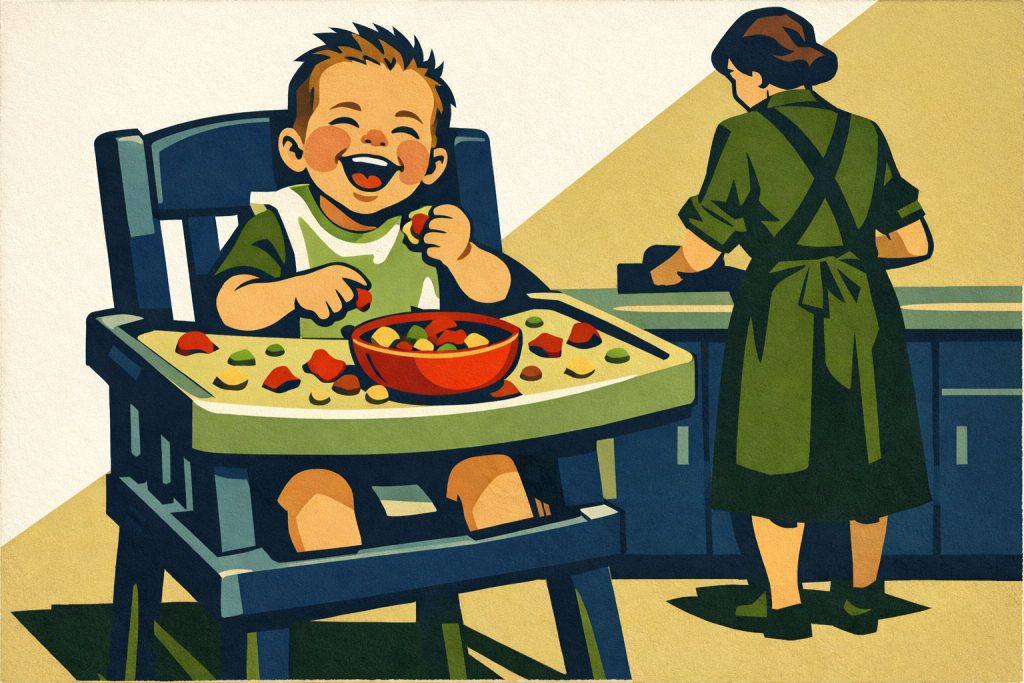
Part 1 in a series on feeding children real food: Raising Real Eaters
Picky is Not a Personality
The story most parents are handed is this: children are picky. They want sweet things, beige things, and whatever came out of a bag. Expecting anything else is a losing battle.
That story is wrong.
Palates are not fixed. They’re formed. By the household, by what gets treated as normal at the table, and by a food industry with a very specific idea of what your child should be asking for.
Understanding how all of that works puts you in a very different position.
Two Goals. Every Meal.
Feeding children is two jobs, not one.
Job one is right now: get real food into the child in front of you today to support their growing body.
Job two is long: build the person who feeds themselves well for the rest of their life.
Most good decisions at the table serve both at once. This series looks at what those decisions look like in practice, one principle at a time.
The Good News about Picky Eating
Children are not born picky.
Palates are formed. They form around what a child meets early, meets often, and meets in a household that treats it as normal. That’s the whole mechanism.
A child raised on real food, cooked simply, seasoned properly, served without ceremony, develops a taste for real food. Not because of discipline or deprivation. Because of exposure.
And here’s what makes this easier than it sounds: you don’t have to make it a thing. No coaxing. No commentary. No celebrating when they eat the broccoli. Just food on the table, eaten casually by the adults in the room, available to anyone who wants it.
Asserting independence is a child’s actual job description. It’s developmentally on schedule. It is not the problem.
The problem is when food becomes the arena for it. The moment eating turns into a battle of wills, the food stops being the point entirely.
The way out: don’t engage. Put the food on the table and walk away. Leave the decision to eat or not exactly where it belongs. With the child. Serve it without ceremony and there’s no battle to join.
Children also have genuine likes and dislikes and those deserve respect. Peas on the side instead of mixed in is a reasonable accommodation. A whole separate meal is not. There’s a difference between flexibility and short-order cooking, and it matters.
The window to shape a palate is open right now. The approach is simpler than you think.
The Outside Noise
There’s one thing worth naming before we go further.
There are people whose entire job is making your child ask you for specific products. Research departments. Budgets in the billions. Cereal characters with names and backstories. Happy Meals engineered to feel like events. YouTube pre-rolls timed for when kids are watching alone.
This is a sophisticated, decades-long project aimed at children who don’t yet know what advertising is. And that means it’s also a teaching opportunity. A child who learns to question what marketing wants them to want becomes an adult who makes their own genuine choices.
Knowing about this manipulation doesn’t mean you’re outgunned. It means you understand the playing field. The parent who sees this clearly stops feeling like they’re failing at the table and starts playing a different game.
It’s not you against your child. It’s you and your child against “the man.” And you have the home field advantage.
This One’s for You Too
If you’ve spent your whole life calling yourself a picky eater, this post is about you.
You weren’t born that way. You were trained. By what was normal in your house, what got served, and by decades of a food industry that made it very easy to eat exactly what it wanted you to eat. Most of us gave in. The pull was real and it was everywhere. That doesn’t make it permanent.
The same process that shapes a child can shaped you today. That’s worth sitting with.
What to Do with This
Put food on the table. Real food, prepared simply. Make it taste good. Butter, salt, a hot pan. Don’t underestimate what proper seasoning does for a child’s willingness to eat something.
Serve it without drama. No “just try one bite.” No negotiating. No watching their face for a reaction. Just dinner.
Small adjustments are fine. Peas on the side. Dressing available. Vegetables roasted instead of steamed. You’re not running a restaurant but you’re also not unreasonable. Respect genuine preferences without building a second menu around them.
Eat it or don’t. That’s the choice on the table.
If dinner doesn’t happen, the kitchen closes until the next meal. No snacks. No dessert detour. No drama.
Kids will tell you they’re starving. They will use that word with full conviction and real tears. They may even writhe on the floor.
“But did you die?”
They will be fine. A hungry child eats at the next meal. That’s the whole system. Trust it.
How did the way you were raised form the relationship that you have with food today?
Share a funny story about your children at the table.
While my mom wasn’t focused on organic, pasture-raised, etc., a lot of what we ate fell into that category. She was big on veggies, fruit and meat. Whatever was served, we had to have some of it, had to eat it, and no alternatives were offered and we had to “clean our plates”. vs how my kids were raised: focus on organic and pasture-raised but not a lot different otherwise. They were required to eat “1 bite” for each year of age (up to 5 bites) but didn’t have to necessarily clean their plates. As adults, both of my girls eat almost anything happily, although interestingly neither is fond of white potatoes. Now on to generation 4 and they both pretty much do the same thing with our 5 grandchildren. I once took parboiled green pepper strips as part of a snack for my then toddler and was told I was abusing her! Yes, I laughed at them.
Wow, Karla, sounds like your mom had a plan and that’s probably the most important part of the success. Whether it’s ‘clean your plate’ or ‘one bite per year,’ the consistency is what sticks. Kids (and parents!) know what to expect.
And four generations later still mostly doing the same thing? That’s a real testament to it working. The green pepper strips story made me smile. Everyone’s a food critic with opinions. Sounds like you raised some good eaters!
“Im a picky eater” or “my child is a picky eater” the battle cry of the crap eaters. A picky eater cares about what they put in their bodies, two totally different things. I know adults who would only eat chocolate cake and hamburgers, NEVER a vegetable or fruit passed into their pie hole …CRAP EATER! I have seen them all, adults who allow their children to do the meal planning or preparing 1 meal for the adults and chicken nuggets and fries for their children. As children we ate whatever our parents cooked including vegetables, salads, pastas, meats etc. Some things we liked more than others but that’s normal I guess. Surely all the advertising done by the fast food industry of MSG, hollow calories and toxic oils doesn’t help the situation much either.
Thanks for such a thoughtful comment. There’s something to this. The “picky eater” label does a lot of heavy lifting for what’s really just not eating real food. Genuine sensitivity to taste or texture is one thing; refusing anything that isn’t beige and fried is another.
The meal planning point stands out too: kids dictating the menu, or getting their own separate plate while the adults eat something else entirely. At that point it’s not pickiness, it’s just an absence of expectation.
Same here growing up. Whatever was on the stove was dinner. I understood as a child that food was expensive, precious, and that someone had taken the time to actually do something for me. It would have been rude to criticize or refuse it. Didn’t mean I loved every bite, but that wasn’t really the point.
And the fast food angle is fair too. When everything’s engineered to be hyper-palatable and cheap, it’s going to reshape what people expect food to taste like.